Why Does the Manufacturing Method Matter?
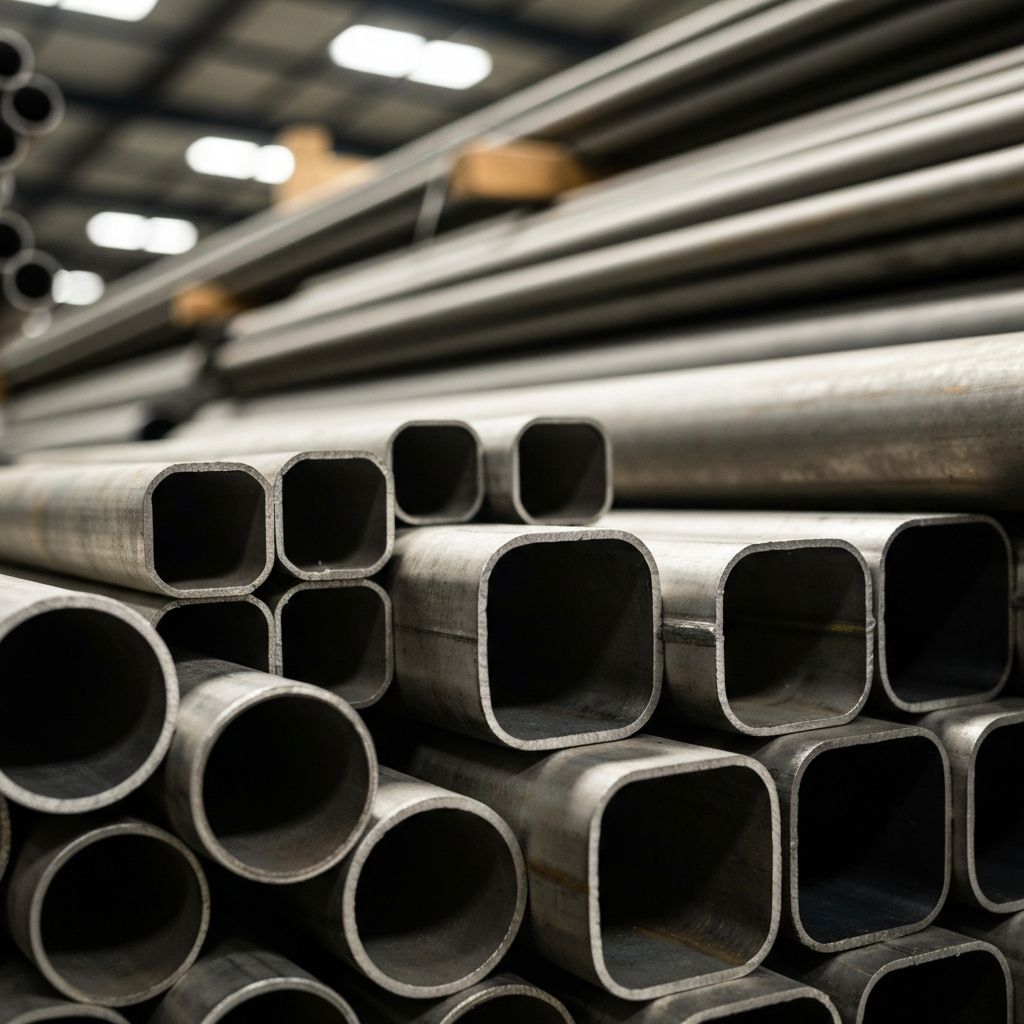
The primary difference lies in how the pipe is born. Seamless pipes are extruded from a solid billet of steel, creating a continuous tube with no joints. Welded pipes start as flat steel sheets that are rolled and fused together. This fundamental difference dictates how much pressure a pipe can handle and how it reacts to stress. One is built for raw strength; the other for efficiency and versatility.
The Consequences of Choosing the Wrong Pipe Type:
- Catastrophic failure under pressure: Using welded pipes in extremely high-pressure environments can risk seam rupture if specifications aren't met.
- Unnecessary budget inflation: Specifying expensive seamless pipes for low-pressure water lines wastes capital that could be used elsewhere.
- Corrosion vulnerabilities: In highly corrosive environments, the seam on a welded pipe can become a focal point for rust and degradation if not properly treated.
Matching the pipe to the pressure and medium is a non-negotiable safety step.
Understanding How They Are Made

Seamless pipes are made by heating a solid steel bar and piercing it through the center to form a tube. This process eliminates the "seam"—historically the weakest point of a pipe—resulting in uniform strength around the entire circumference.
Welded pipes, however, utilize modern electric resistance welding (ERW) or laser welding to fuse the edges of a rolled sheet. While older welded pipes had reputation issues, modern technology has made the seam incredibly strong, often indistinguishable from the rest of the metal.
Key Performance Differences:
- Pressure Ratings: Seamless pipes generally handle higher pressures and temperatures because they lack a seam.
- Wall Thickness Consistency: Welded pipes often have more consistent wall thickness because they start from precision-rolled sheets.
- Surface Finish: Welded pipes usually offer a smoother surface finish, whereas seamless pipes can be rougher due to the extrusion process.
These factors determine whether a pipe belongs in a nuclear reactor or a sprinkler system.
Pipe Sizes, Tolerances, and Availability
Manufacturing constraints play a huge role in availability. Seamless pipes are difficult and expensive to produce in very large diameters; they are typically limited to sizes under 24 inches. Welded pipes, however, can be manufactured in massive diameters and long continuous lengths, making them the go-to choice for cross-country pipelines and large-scale infrastructure.
Common Applications You'll See:
- High-Pressure Lines: Seamless pipes for oil, gas, and steam generation.
- General Plumbing & Structural: Welded pipes for water mains, scaffolding, and fencing.
- Large Diameter Transit: Welded pipes for municipal water and sewage transport.
Choosing the wrong form factor can lead to sourcing nightmares and installation delays.
Why Correct Specification Is Critical
Even the strongest seamless pipe is a waste if the application doesn't demand it, and a welded pipe is a liability if the pressure exceeds its rating. Engineers must calculate the "hoop stress" the pipe will endure. Seamless pipes provide peace of mind for critical, lethal, or volatile substances, while welded pipes offer a reliable, cost-effective solution for standard loads.
Poor Selection Can Lead To:
- Unexpected leaks at weld seams
- Shortened lifespan of the piping system
- Inflated project costs that reduce ROI
This is why procurement teams strictly adhere to ASTM and API standards for every length of pipe ordered.
Conclusion: The Right Tool for the Right Job
Neither seamless nor welded pipe is universally "better"—they simply serve different masters. Seamless pipe is the heavy lifter, designed for the most punishing environments where failure is not an option. Welded pipe is the versatile workhorse, offering consistency and value for the vast majority of construction and transport needs.
Recognizing the strengths of each ensures that your project stands on a foundation of safety and financial sense. It isn't just about moving fluids. It's about engineering a system that survives the pressure you put on it.